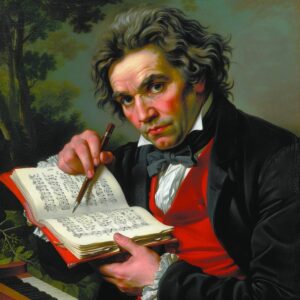
George Frideric Handel, a paragon of the Baroque era, has captivated audiences for centuries. His masterpieces resonate with emotion and grandeur, epitomizing the extravagant spirit of his time. Amidst the sweeping melodies and intricate compositions, there lie fascinating facts about Handel that reflect not only his genius but also the turbulent world he inhabited. Here, we delve into seven riveting truths about this illustrious composer, each revealing layers of his life and legacy that continue to intrigue music lovers today.
1. A Multifaceted Identity
Handel was born in 1685 in Halle, Germany, as Georg Friedrich Händel. However, he later adopted an anglicized version of his name, which made him more accessible to an English-speaking audience. This transformation speaks volumes about his adaptability and desire to thrive in a foreign landscape. Settling in London in 1710, he became a pivotal figure in the British music scene, integrating various musical traditions, from Germanic and Italian styles to English folk tunes. His ability to encapsulate differing cultural influences reflects a profound understanding of music as a universal language.
2. The Operatic Pioneers
Handel’s foray into opera set the stage for a revolution in the genre. While the operatic form drew heavily from the Italian tradition, Handel infused it with dramatic depth and character that was unprecedented at the time. His operas, including masterpieces like “Giulio Cesare” and “Rinaldo,” depict not merely the narratives but the emotional arcs of the characters themselves. The arias often showcase virtuosic vocal techniques, yet they are anchored by the storyline’s emotional weight, providing clarity amidst the complexity. This synthesis of virtuosity and emotive storytelling not only elevated opera but also paved the way for future composers.
3. The Messiah Phenomenon
Perhaps one of Handel’s most renowned works, “Messiah,” first performed in Dublin in 1742, serves as a testament to his ability to connect deeply with audiences. Unlike previous oratorios, “Messiah” spans the entire story of Jesus Christ, from his birth to his resurrection, yet it eschews traditional narrative forms. Instead, it presents a series of reflective moments that evoke a spectrum of emotions: exultation, sorrow, hope, and redemption. Handel’s adroit use of the chorus elevates the work, transforming it into a collective experience rather than a solitary one. This communal aspect of performance has made “Messiah” an enduring holiday tradition, bridging generations and cultures.
4. Entrepreneurial Spirit
Handel was not merely a composer; he was also a savvy businessman who understood the mercurial nature of public tastes. In the early 18th century, London’s operatic scene was saturated, leading to fierce competition. Rather than succumb to the pressures of the market, Handel launched the Royal Academy of Music in 1720 to promote Italian opera, employing a mix of innovation and strategic partnerships. This endeavor not only showcased his musical works but also established him as a formidable figure in the business of music, illustrating the intricate connection between art and commerce during the Baroque period.
5. A Parallel with Bach
Though Handel and Johann Sebastian Bach are often considered contemporaries, their careers diverged remarkably. While Bach remained ensconced in the quiet of German towns, Handel achieved international fame. Despite their contrasting paths, both composers shared an admiration for each other’s work, as evidenced by Handel’s compositions that exhibit a remarkable complexity and sensibility akin to Bach’s. Their mutual influence encapsulates a fascinating dichotomy; one was a public figure glowing in the limelight while the other toiled away in relative obscurity. The appreciation and resonance of their works today highlight the irreplaceable contributions both made to Western classical music.
6. An Unwavering Resilience
Handel faced numerous adversities throughout his life, including financial crises, health issues, and the decline of opera’s popularity. Notably, he experienced a significant health scare in the form of a stroke around 1737, which temporarily hampered his capacities as a composer and performer. Nonetheless, he displayed an unwavering resilience, regaining strength and returning to composition with renewed vigor. One of his poignant reflections on mortality is found in the ambitious “Giaconda” or “Theodora,” showcasing a deep exploration of suffering and humanity. Handel’s life is a testament to resilience and artistic commitment, reminding us that true creativity often emerges from the crucible of hardship.
7. The Legacy of a Cultural Icon
Handel passed away in 1759, yet his legacy endures, as his music resounds in concert halls, churches, and homes across the globe. His influence can be observed in a vast array of genres, from classical to popular music. The resonance of works like “Water Music” and “Music for the Royal Fireworks” continues to inspire contemporary composers and musicians. Furthermore, Handel’s ability to articulate the human experience through music evokes an emotional continuum that echoes through time, affirming the timeless appeal of his artistry. His ability to harness the power of music and integrate it into the cultural fabric underscores his eternal relevance as an icon of music history.
As we reflect on the myriad dimensions of Handel’s life and works, it becomes evident that his journey through the Baroque landscape is not merely a tale of musical triumph. Rather, it encapsulates the complexities of artistry, resilience, and cultural synthesis. Each fact reveals a piece of the puzzle that makes Handel an enduring figure in the pantheon of classical music, inviting us to delve deeper into the profound legacies of his contributions.